




The West Asia is currently navigating an unprecedented geopolitical storm, defined by two massive, simultaneous crises that appear geographically distinct but are inextricably linked. On land, the devastating war in Gaza continues unabated, with local health authorities reporting a death toll that has now surpassed the staggering figure of 74,000. At sea, a major blockade has effectively paralyzed the Strait of Hormuz, universally recognized as the world’s most critical shipping artery for energy resources. To understand the current state of global politics, international relations and economic instability, one must examine how these two flashpoints, one a humanitarian catastrophe, the other a global economic chokepoint are deeply tied together in a complex web of leverage and diplomacy.
The catastrophe unfolding in Gaza has fundamentally altered the regional security landscape. Beyond the immense loss of life, the structural devastation has left millions without basic necessities. The United Nations World Food Programme (WFP) recently highlighted that approximately 1.4 million people in Gaza roughly two-thirds of the population are facing acute food insecurity at crisis levels or worse. Despite widespread international condemnation and countless United Nations (UN) resolutions, diplomatic efforts to secure a lasting ceasefire have repeatedly stalled. This prolonged failure to halt the military operations on the ground has created a dangerous vacuum, one that regional actors have eagerly filled by expanding the theater of conflict to the maritime domain.
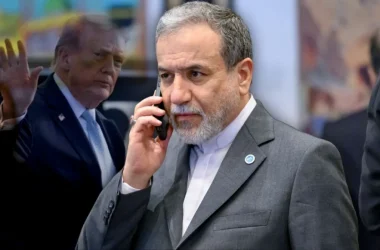
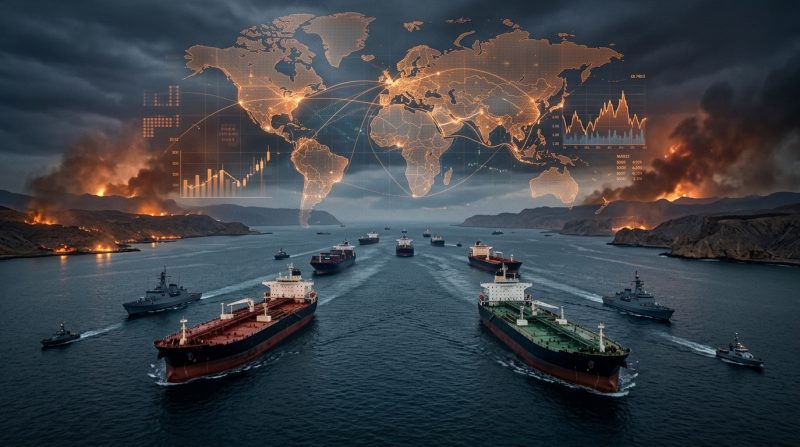
Recognizing the international community’s vulnerability, Iran has positioned the Strait of Hormuz as its ultimate bargaining chip. This narrow waterway is the transit point for roughly 20 percent of the world’s daily oil consumption and a massive portion of global liquefied natural gas (LNG). Iran has made its strategic stance unequivocally clear: The fate of the Strait of Hormuz is tied directly to the war in Gaza. According to senior Iranian officials, including Mohsen Rezaei, the Secretary of Iran’s Supreme National Security Council, this crucial waterway will not fully reopen until the United States (US) and its allies change their regional conduct. Iran has established strict, non-negotiable conditions for peace, which include an immediate end to the wars in Gaza and Lebanon, the release of frozen Iranian financial assets and the comprehensive lifting of international sanctions.
By explicitly linking the reopening of the Strait to the cessation of hostilities in Gaza, Tehran is executing a calculated strategy of asymmetric pressure. Iran is acutely aware that it cannot directly match the conventional military might of Western powers. Therefore, it is using the global economy as its primary weapon. Because so much of the world’s energy supply relies on free passage through Hormuz, Iran knows that shutting it down or even threatening to do so will inevitably force global superpowers to pay attention to the demands regarding Gaza. The sea has effectively been leveraged to address the grievances on land, ensuring that a localized war has immediate global economic consequences.
Unsurprisingly, this maritime blockade has triggered widespread panic among global leaders, sparking a flurry of high-stakes diplomatic interventions. Countries in Europe, heavily reliant on steady energy imports are pushing hard alongside Gulf nations to restore order. Recently, France President Emmanuel Macron embarked on a regional tour, meeting with Qatar’s Emir, Sheikh Tamim bin Hamad Al Thani in Doha. The two leaders issued a joint statement demanding two immediate outcomes: The urgent implementation of a ceasefire in Gaza and the restoration of freedom of navigation in the Strait of Hormuz without constraints or fees. The European Union (EU) has also expressed deep concern, launching naval operations to protect commercial vessels, warning that ongoing tensions will severely disrupt global supply chains and inflate food and energy prices worldwide.
However, this aggressive diplomatic and military response to protect shipping lanes highlights what many analysts describe as a glaring global double standard. The international community has demonstrated that it can mobilize naval armadas, issue joint declarations and exert immense diplomatic pressure within weeks to protect global trade routes and oil supplies. Yet, that same international community has struggled to take decisive, unified action to stop the staggering loss of human life in Gaza. This dynamic suggests a grim reality of modern geopolitics: The disruption of commodities often triggers a much faster and more forceful global intervention than the destruction of communities.
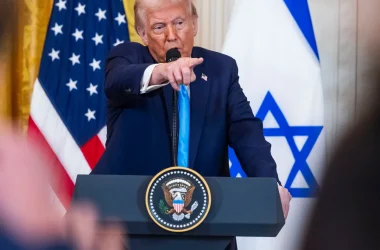
If the global economic situation is so dire, why hasn’t a ceasefire been forced upon the warring parties? Experts point heavily to the current strategic calculus of the US under President Donald Trump. Recent reports and diplomatic maneuvers suggest that Washington is not rushing to solve the Gaza crisis purely for the sake of ending the immediate conflict. Instead, the U.S. administration views Gaza as just one piece of a much larger, highly complex West Asia puzzle. The current strategy aims for a comprehensive “mega-deal” that would permanently restrict Iran’s regional power, secure the Strait of Hormuz and facilitate broader diplomatic normalizations between Israel and Arab nations.
Consequently, the U.S. recently rejected Iran’s conditions to reopen the strait, with officials publicly dismissing the proposal as a “cynical” attempt to extort the international community. Rather than accepting a piecemeal ceasefire dictated by Tehran, the U.S. appears willing to let the Gaza ceasefire negotiations drag on if it means they can eventually secure a broader, more definitive agreement regarding Iran’s nuclear capabilities and proxy networks. This approach treats the ongoing war as a tragic but necessary holding pattern while negotiators attempt to leverage maximum pressure against rival factions in the region.
Ultimately, this leaves the world at a dangerous and volatile standstill. Western powers are desperate for the Strait of Hormuz to open to save their economies from inflation and supply chain collapse, but they remain either unable or unwilling to force the necessary political concessions in Gaza. Meanwhile, Iran and its regional allies refuse to back down at sea while the bombardment on land continues. The fundamental lesson here is simple but profound, global stability cannot be achieved in isolated fragments. Superpowers cannot artificially demand safe waters for their cargo ships while simultaneously ignoring the collapse of international law on land. Until the root cause of the regional outrage, the war in Gaza is genuinely resolved, the world’s vital oceans will remain a choked and militarized zone of conflict.
Written By Hasya Hasshim (Executive Research & Advocacy)